

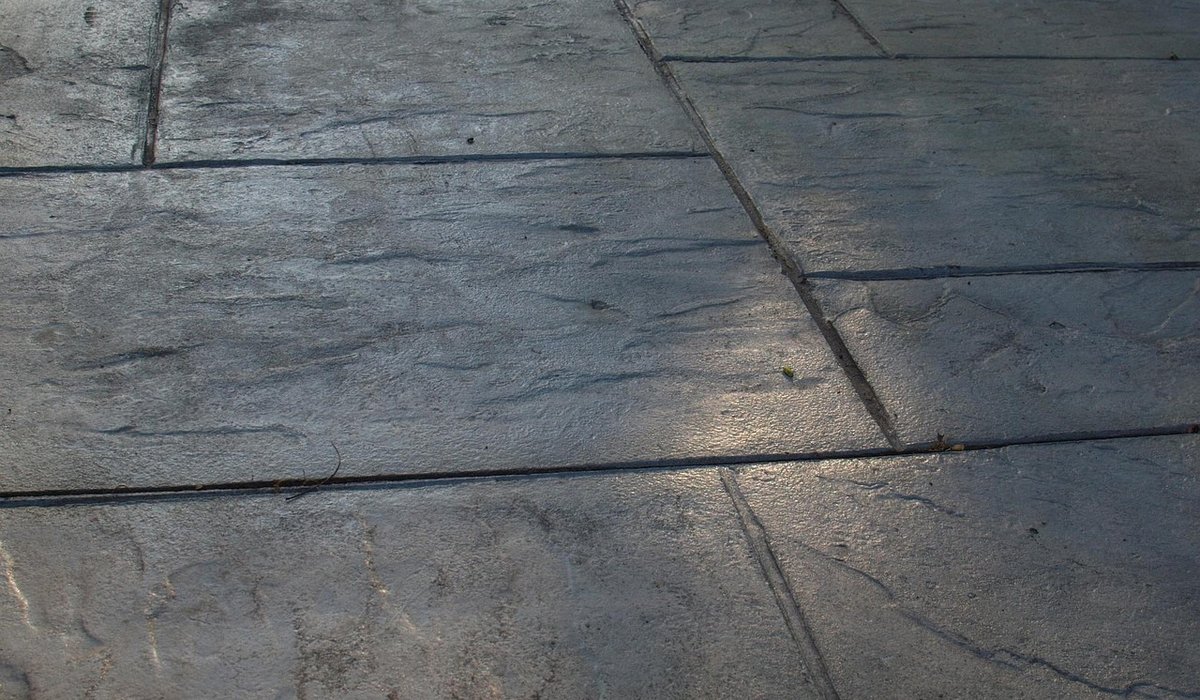
Why Tiles Suit a Courtyard Better Than Anything Else
A courtyard asks a lot of a surface. It is usually overlooked from the kitchen or living room, often shaded for part of the day, and expected to look presentable in February as well as July. Tiles handle that brief better than most materials. They do not grey and split like timber, they do not migrate onto the kitchen floor like loose gravel, and they can be cleaned with a stiff brush and a bucket rather than a pressure washer and a lost weekend. The secret is designing the paving so it stays tidy almost on its own. That comes down to three decisions made early: tile size, colour and drainage.
Choose a Large Format and Fewer Joints
Every joint in a courtyard is a place for moss, weeds and algae to take hold. Larger tiles mean fewer joints, less grout to scrub and a floor that reads as one calm surface rather than a busy grid.
- 600 x 600mm is the safe all-rounder and suits most small courtyards.
- 900 x 600mm works well in a space around 3 to 4 metres wide and gives a modern, generous look.
- 1200 x 600mm is superb in narrow courtyards, laid lengthways, because the long lines stretch the space.
For an outdoor installation, specify 20mm porcelain or 20–30mm natural stone rather than standard 10mm interior tiles. The extra thickness copes with foot traffic, furniture and the occasional frost heave far more gracefully. Also check the tile dimensions against the space before you buy: if your courtyard is 3.2 metres wide, a 900mm grid leaves awkward slivers at the edges. Aim for any cut tile to be at least a third of a full tile wide, and set the pattern from the most visible edge — usually the house wall.
Keep the Palette Muted and Mid-Toned
Colour has more effect on maintenance than most people expect. Very pale tiles show every leaf stain and footprint; very dark tiles show dust, water marks and dried-on grit. Mid-tone greys, warm buffs, soft sandstones and gentle charcoals are far more forgiving and tend to look settled rather than stark.
Texture matters too. A lightly riven or gently textured surface gives grip underfoot when wet, which matters in a shaded courtyard, but deep crevices trap dirt. Look for a tile rated R11 for slip resistance — it is the usual benchmark for external paving. Honed or smooth porcelain is easier to sweep, so if the courtyard is sheltered and rarely wet, it is a legitimate choice.
Get the Drainage and Levels Right First
This is the part that decides whether your courtyard is low-maintenance or a permanent chore. Water that sits on the surface stains the tiles, feeds algae and works its way into joints.
- Set a fall of at least 1:80 away from the house — slightly steeper on textured tiles.
- Keep the finished paving at least 150mm below the damp-proof course, or use a suitable threshold detail.
- In an enclosed courtyard, water has nowhere to escape, so plan a low point and a linear channel drain or gully rather than hoping it will vanish.
- Consider permeable joints or a gravel-filled margin to let some water soak away naturally.
If you are laying over an existing patio, a pedestal system avoids excavation altogether and lets water drain freely beneath the tiles. Worth the extra cost in a tight courtyard.
Use Modern Jointing and Solid Edges
Traditional sand-and-cement pointing cracks and grows weeds within a couple of seasons. A brush-in resin jointing mortar is the better modern answer: it stays slightly flexible, resists weeds and algae, and does not need sealing. Keep joints around 5–8mm externally; tighter joints look neat but cannot be filled properly.
Edge restraint is equally important. Haunch the perimeter with concrete or a discreet kerb so the paving cannot creep. Include movement joints across large areas and around the perimeter to allow for thermal movement.
Keeping It Tidy Through the Year
A little routine goes a long way. Sweep monthly, wash with warm soapy water and a stiff brush twice a year, and check joints each spring. Avoid acidic cleaners on cement-based joints and limestone. Vitrified porcelain needs no sealing; natural stone benefits from an impregnating sealer every few years.
Finally, lift pots onto feet so air can circulate, use drip trays under planters, and fit glides to furniture legs. Choose a few large containers rather than many small ones, and the courtyard will look composed all year round with almost no effort at all.


Coding is used in almost all aspects of life and work now, be it directly or indirectly. It’s not just for companies in the tech sector. “An increasing number of businesses rely on computer code,
Coding is used in almost all aspects of life and work now, be it directly or indirectly. It’s not just for companies in the tech sector. “An increasing number of businesses rely on computer code,
Coding is used in almost all aspects of life and work now, be it directly or indirectly. It’s not just for companies in the tech sector. “An increasing number of businesses rely on computer code,