

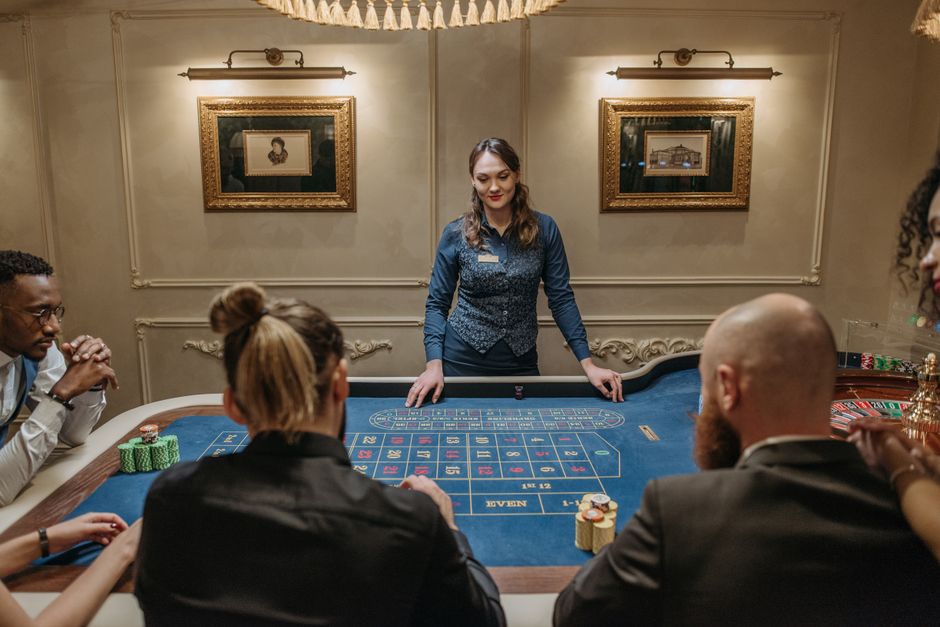
Every week, someone DMs me the same question in a slightly different form: "Which slot actually pays?" or "How do I stop bleeding money on accas?" The honest answer is that iGaming rewards people who understand mechanics, not people who chase feelings. Whether you're spinning reels at 2 a.m., grinding a micro-stakes poker table, or building a Sunday football coupon, the same principle applies — know the math, respect the variance, and treat the whole thing like an entertainment budget with a sharp edge attached. Here's what actually matters.
Slot Volatility Is the Only Slot Stat That Changes How You Play
RTP gets all the headlines. A 96% RTP slot returns 96 cents per euro staked over millions of spins. Great. But RTP tells you almost nothing about what a single session looks like. That's volatility, and it's the number that decides whether your bankroll survives the night.
Low-volatility slots like Starburst or Blood Suckers pay small, frequent wins. You can sit on a 100-spin bankroll for a while. High-volatility monsters like Money Train 3 or San Quentin can eat 300 spins without a sniff, then drop a 5,000x hit in one bonus round. Neither is "better." They're different tools, and playing the wrong one for your bankroll is how people tilt.
- Small bankroll (under 200 units): stick to low or medium volatility, bet 0.5–1% per spin.
- Medium bankroll (200–500 units): medium-to-high volatility, 0.5% per spin, expect swings of 100+ spins.
- Large bankroll (500+ units): high volatility is fine, but cap session loss at 30% of the roll.
One more thing: bonus buy features aren't free money. A 100x buy on a 96% RTP slot is priced so the house edge holds. You're just compressing variance into a single event. It is also worth checking nhacaitangtien.com.co before deciding.
Poker: The Tells That Still Work in 2024
Online poker killed the classic sunglasses-and-trembling-hands read. But live poker still leaks information, and most of it isn't in the face — it's in the timing and the chips.
Three tells I still trust at a live $1/$2 or $2/$5 table:
- The snap-check on a wet board. A player who checks instantly on a flush-draw flop usually has nothing or a marginal hand. Strong hands tend to pause, because the player is deciding bet sizing.
- The oversized chip cut. Someone who cuts chips into a neat stack before betting big is often rehearsing. Genuine value bets get pushed in messily; bluffs get arranged.
- The stare-down after a river bet. If a player bets and immediately locks eyes with you, that's usually a bluff looking for a fold. Players with the nuts tend to look at the board, not at you.
Online, the equivalent edge is timing tells — snap-bets are often weak or auto-pilot, while a 20-second tank on a dry board usually means a real decision. But be careful: good regs randomize their timing, so treat these as soft reads, not laws.
Position still beats tells. Playing 18–22% of hands from the button and 8–10% from under the gun will out-earn any read-based hero call.
Sports Betting: Where the Edge Actually Lives
Most bettors lose because they bet the teams they like on the markets they see advertised. The sharper approach is boring and mathematical.
Start with implied probability. A -150 favorite in American odds implies 60% chance (150 ÷ 250). A +200 underdog implies 33.3% (100 ÷ 300). If you genuinely think the underdog wins 40% of the time, that's a 6.7% edge — a real bet. If you only think they win 30% of the time, you're donating.
Where do edges come from?
- Line movement: sharp money moves lines fast. If a line opens at -3 and closes at -5, the market has learned something. Betting the early side can be profitable.
- Prop markets: player props are often softer than moneylines because books have less data and lower limits. A running back's rushing yards line is frequently mispriced by 5–10 yards.
- Live betting: in-play markets overreact to single events. A goalkeeper mistake doesn't shift true xG by 40%, but the live odds often shift more.
Bankroll rules matter more than picks. Flat-betting 1–2% per play keeps you alive through a 10-bet losing streak, which will happen even at a genuine 55% win rate.
The Bankroll Framework Nobody Teaches
This applies across slots, poker, and sports. Separate your iGaming money from your rent money, permanently. Then set three numbers before you play:
- Session loss limit: the amount you're willing to lose in one sitting (typically 10–20% of your bankroll).
- Stop-win point: the point where you walk. Not because you have to, but because protecting profit is a skill most people never learn.
- Time limit: usually 90 minutes. Fatigue destroys decision-making faster than bad luck does.
The players who last years, not weeks, treat this like a hobby with a budget. They don't chase losses. They don't double stakes after a bad beat. They keep records — a simple spreadsheet of deposits, withdrawals, and net result per session. That record is the only real feedback loop you'll ever get.
Bonuses, RTP, and the Fine Print That Eats Your Edge
Welcome bonuses look generous until you read the wagering requirement. A 100% match up to €200 with a 35x playthrough on the bonus means you need to wager €7,000 before withdrawing a cent. On a 96% RTP slot, expected loss on that wagering is around €280. That's not a bonus; that's a discount coupon with a heavy tax.
Check three things before claiming anything:
- Wagering contribution: slots usually contribute 100%, but table games contribute 10% or 0%. Betting on blackjack to clear a slot bonus is a trap.
- Max bet during bonus: often capped at €5. Exceed it once and the bonus is void.
- Time limit: typically 7–30 days. Read it.
Genuinely good value comes from reload bonuses, cashback offers, and loyalty programs where the wagering is low or nonexistent. If the terms run more than two screens, close the tab.
The Long Game
Everything in iGaming comes back to one uncomfortable truth: the house has an edge, and your job is to either find a rare market where it flips (skill poker, sharp sports betting) or treat the entertainment cost as the price of admission. Slots are unlikely to make you rich, but they're excellent for what they are — a high-variance thrill with a known cost per hour. Poker rewards study and discipline. Sports betting rewards patience and price-shopping across three or four books. None of them reward emotion, chasing, or Saturday-night decision-making. Pick your game, learn its mechanics cold, set your limits before you log in, and keep a ledger. That's the entire edge most recreational players ever need.


Coding is used in almost all aspects of life and work now, be it directly or indirectly. It’s not just for companies in the tech sector. “An increasing number of businesses rely on computer code,
Coding is used in almost all aspects of life and work now, be it directly or indirectly. It’s not just for companies in the tech sector. “An increasing number of businesses rely on computer code,
Coding is used in almost all aspects of life and work now, be it directly or indirectly. It’s not just for companies in the tech sector. “An increasing number of businesses rely on computer code,